
- Fixed price No surprises
- Private Just your group
- Secure Safe payment
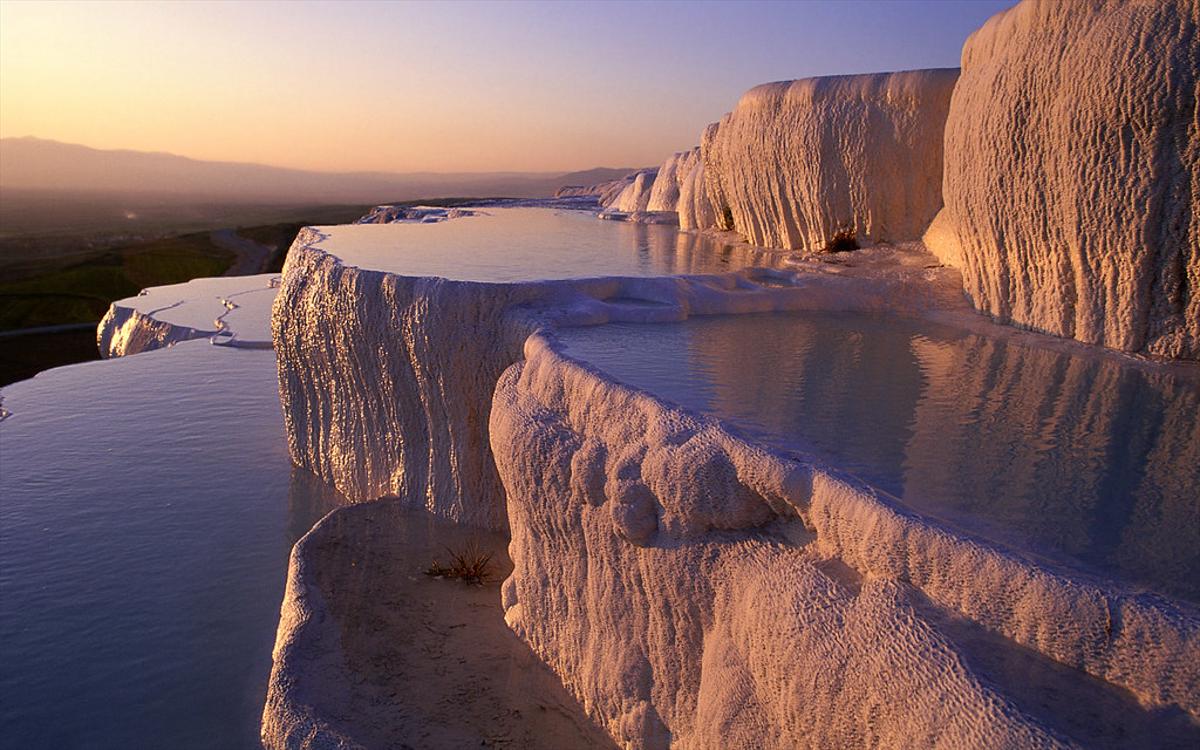
Pamukkale is really two sights on one hillside: a slope of white travertine basins and, on the plateau above, the ruins of the spa city of Hierapolis. Photographs show the first and tend to forget the second. Here are the facts about Pamukkale worth knowing before you go, starting with the name.
The terraces are not a finished work. The springs that built them are still running, and the rock is still growing.
The ruins begin where the terraces end, and they cover far more ground. Give the ancient city of Hierapolis at least as much time as the pools.
UNESCO listed Hierapolis-Pamukkale in 1988 as a mixed site, valued for its natural landscape and for its archaeology at once. The archaeology keeps making news. Christian tradition links the apostle Philip with Hierapolis, where a martyrium was built in his memory in the 5th century, and in 2011 archaeologists announced that they had found his tomb close by. The site museum is housed in the vaulted halls of the Roman baths.
Pamukkale lies 18 to 20 km north of Denizli. The nearest airport, Denizli Çardak (DNZ), is about 70 km away, a little over an hour by road. A Pamukkale airport transfer booked on Tranigo is a private ride in a Vito minivan or a 13-seat Sprinter, at a price fixed when you book; the details are on the Denizli Çardak Airport page. For a guided visit, a balloon flight or a paragliding flight, see Pamukkale tours.

Comments (1)
Hi.
How may I assist you please?
hi